La journée sans téléphone

C’est parti d’une idée du comité des élèves en lien avec le mois de la santé mentale. Un réel Insta accompagnait le projet : dans cette vidéo, plusieurs élèves discutent du temps qu’ils passent sur leur téléphone et à quel point cela peut les éloigner de leurs camarades. Le but était de nous motiver à laisser nos téléphones de côté pour la journée et à échanger plus entre nous. C’est une belle initiative, dont tout le monde était au courant, pas comme plusieurs autres projets du gymnase malheureusement. Mais plein d’arguments contre sont vite apparus.

De la part des élèves, j’ai entendu : « je ne connais pas encore mon horaire par cœur » et « j’ai seulement Twint pour payer » ou encore « je ne peux pas prendre le bus/train sans musique dans les oreilles ».

Pourtant, si on réfléchit deux secondes, il est facile de trouver des solutions : imprimer ou noter son horaire, prévoir un pique-nique ou simplement laisser son téléphone au casier en arrivant à l’école.

Certains professeurs avaient eux aussi des objections : ils ont également mentionné l’argument de Twint ou le fait que le contrôle des absences se fait en ligne, sur leur téléphone.

Au final, j’ai l’impression que beaucoup n’ont même pas essayé de participer, ce qui est plutôt dommage. Bravo à celles et ceux qui ont joué le jeu !
Et si la journée an téléphone revient, on sait maintenant comment s’y adapter pour pouvoir aussi participer à l’effort !

Kaléa Saint-Dénis

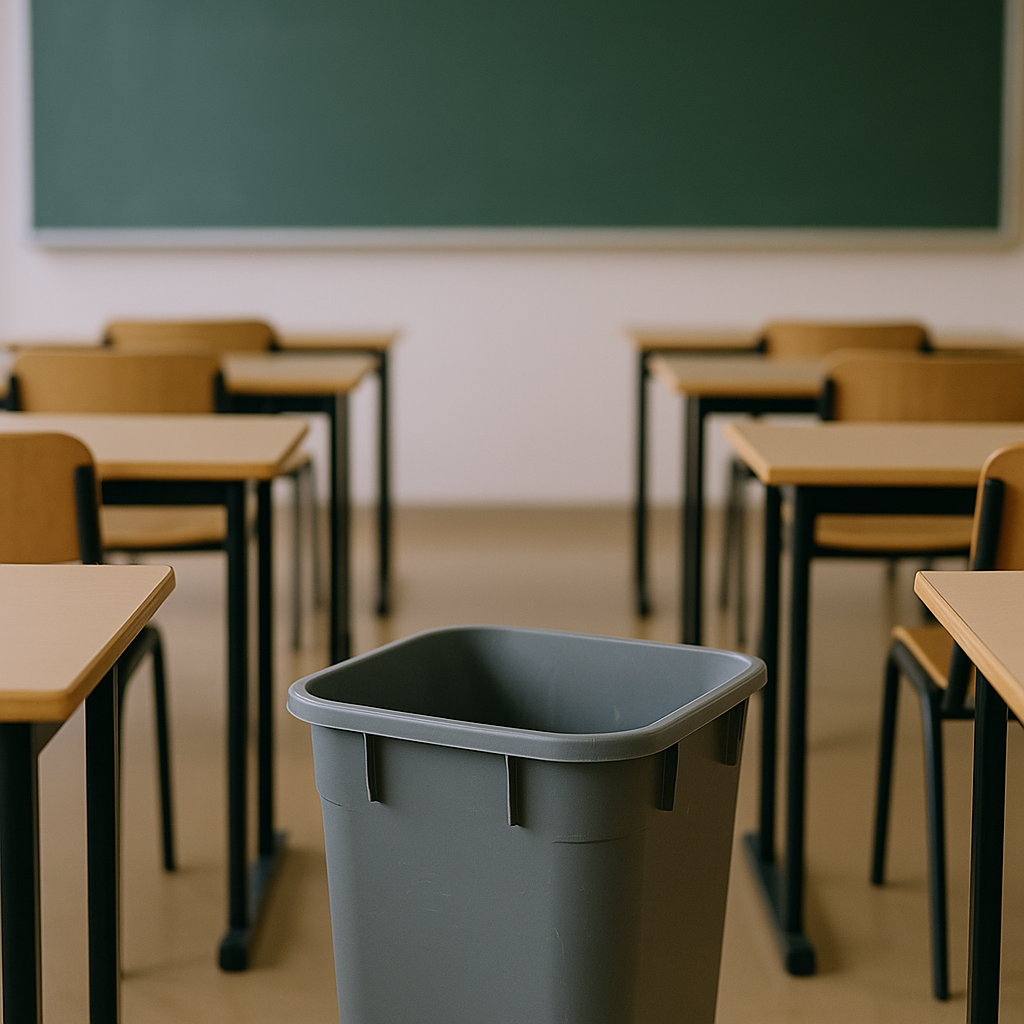
Plus de poubelles dans les gymnases vaudois ?

Pour la rentrée 2025, le canton de Vaud a décidé de retirer les poubelles des salles de classe des gymnases vaudois, et de réduire la fréquence des nettoyages. Par cette mesure, le canton espère économiser 500 000 francs et, par la même occasion, sensibiliser au tri des déchets.

Cette mesure soulève des protestations, tant de la part des élèves que des enseignants. De fait, un tel changement menace de dégrader considérablement l’hygiène des bâtiments ; d’abord parce qu’ils seront moins souvent nettoyés, et ensuite parce que probablement peu de gens auront le courage de transporter, fût-ce seulement vers un point précis du gymnase, leur sac à déchets personnel pour, en fin de journée, trier et jeter son contenu. Les journées des gymnasiens sont déjà longues et leurs sacs lourds. Comme le font remarquer plusieurs commentateurs du 20 Minutes, un gymnase sans poubelle risque d’en devenir une.

La décision interpelle d’autant plus que l’économie qu’elle est censée permettre paraît dérisoire, surtout en comparaison des dizaines de millions de francs que la Direction générale de la fiscalité a fait perdre au canton entre 2009 et 2021, en imposant les plus riches contribuables en dessous de ce qui était légal (Le Temps, 26 août 2025).

Toutefois, le canton précise que la mesure pourra être adaptée selon le retour des usagers. Par ailleurs, notre gymnase n’a pas encore retiré les poubelles des salles de classe. Peut-être qu’au final, nous n’aurons pas besoin d’ajouter un sac poubelle à nos affaires de cours.

Aliénor Müller

From a Bilingual maturity student who spent one year in Germany

Last year, I was welcomed at Goethe-Gymnasium in Hamburg for one year as part of my bilingual maturity program. I am now writing a little report, to share my experience with you and maybe share some inspiration towards international years.

What’s different in comparison to Switzerland? 

I think there are quite a lot of differences, and I’m glad I waited until I started studying again in Switzerland because now, I really notice the contrast. If we’re talking about Goethe, the average school day there is a lot shorter. In Switzerland in my first year, I finished as early as 15:30 only on one day in four weeks. In Germany, I would finish at 14-15 o’clock on average and my weekend started on Fridays at 13:15. In Switzerland the latest you finish school can be 17:20… This leads to German students having more free time. Many of my friends go to sport clubs, train at the gym regularly, work side jobs or already have small businesses. We also had a slower learning rhythm and less homework than in Switzerland. After talking with friends who also went abroad, we agreed that school was more “chill”. Come late to class in Switzerland, and you’ll quickly get problems; in Germany sometimes half of the class arrived late. I also think teachers are friendlier and more down-to-earth in Germany. We are not addressed in the third person, and after class we can often talk with them if we need to. Really, I like Germany’s friendliness. I made great friends despite knowing I was staying just for one year. I also managed to have meaningful conversations with strangers I’d just met in town, which doesn’t happen in Switzerland. However, for this I’m not sure whether it’s due to the general friendliness or me being more at ease in a city where people don’t know me.

How did the year abroad go? 

It was a bit stressful at first: in Switzerland I had an amazing German level, yet in Germany it was below average. I truly struggled with finding my words in subjects like Maths and Geography. The famous “Fachsprache” (technical language) wasn’t something taught to us in basic German classes. However, once I got the hang of it, I found it easier, and I noticed lots of progress in my German. Goethe’s teachers also grade your general participation in each class. Funnily enough, that became my greatest strength, raising most of my grades by a few points. When I couldn’t find the words or understand some idioms, my friends would help me. I also really like the overall friendliness I experienced at Goethe. I already knew Hamburg well and lived with my grandparents, so I was at ease. I didn’t get the hang of the S-Bahn at first and got lost at least three times… I’d love to say it got better, but apparently even locals struggle.

What did you do in your free time?  

Since we had shorter school days, this left me with a lot of time. Often, I spent this time at home. However, I had a really explorative mentality: I knew that this year was “the time” to explore any spots I could find in Hamburg and its surroundings (usually I visit Hamburg for vacations and not everything might be open / available). In that year I visited a lot! I went to concerts, theatres, orchestras, museums, fairs, shows… Most of the time I travelled alone. I was happy to learn about the school’s “Culture Evening”, where we would go out and visit events in a friendly non-scholar setting. I also invited my new friends to go to the cinema, orchestra or to go eat together at an interesting place. I truly had some of the most interesting conversations then.

What do you think about Hamburg? 

I was born there before I moved to Switzerland. Hamburg is always in my heart! I love its architecture, I love the cold north breeze, I love how social it is with the number of events I could visit. Visiting places like Planten und Blomen, the Elbphilarmonie and the Speicherstadt is a must! This was the first year I had been able to visit the Christmas market since I stayed there for the vacations, and I loved the ambiance near the Alster. The weather is a bit gloomy, which is something you got to get used to: I got very tired in the beginning due to the lack of sun. But when you forget about this and enjoy the fresh air – it’s totally worth it. I can only recommend picking Hamburg as an exchange year destination, but only if you’re up to experiencing colder temperatures and being a bit further from Switzerland.

Is it worth doing an exchange year?

Absolutely! If you’re up to a bit of challenge and some struggles with adaptation, the benefits of language learning, new lifestyle, cultures and experiences are definitely worth it! Feel free to check out the possibility of doing a bilingual exchange if it piques your interest. Unfortunately, it’s undeniable that you will miss some people from both places. So, to any friends reading this, I can’t wait for the next time I’m back in Hamburg to pay a visit 😊.

Hugs from Nyon.

Nicole Metzler